What materials do you weld with robots?
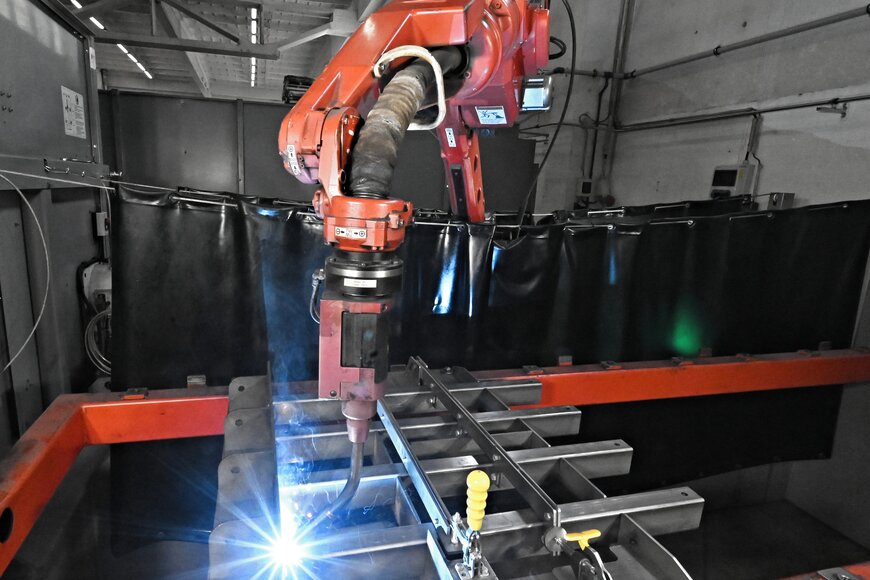
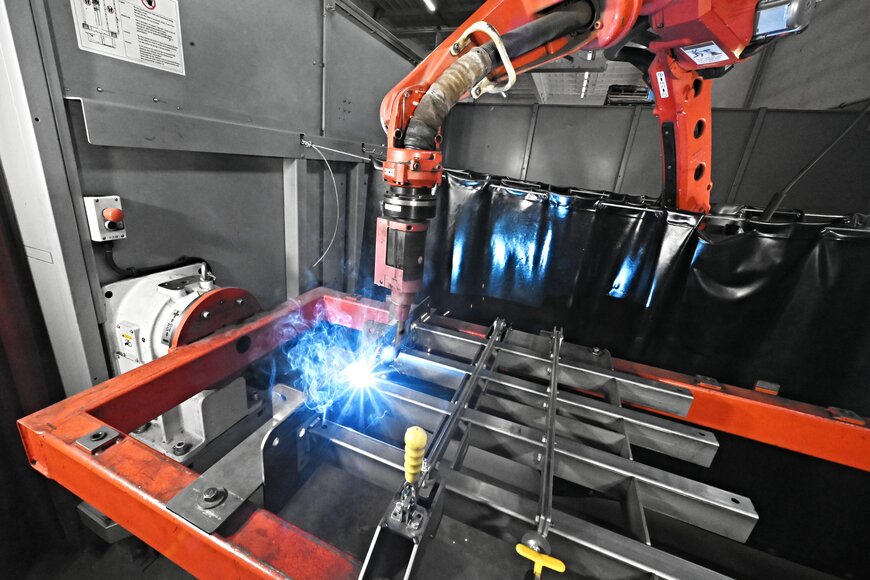
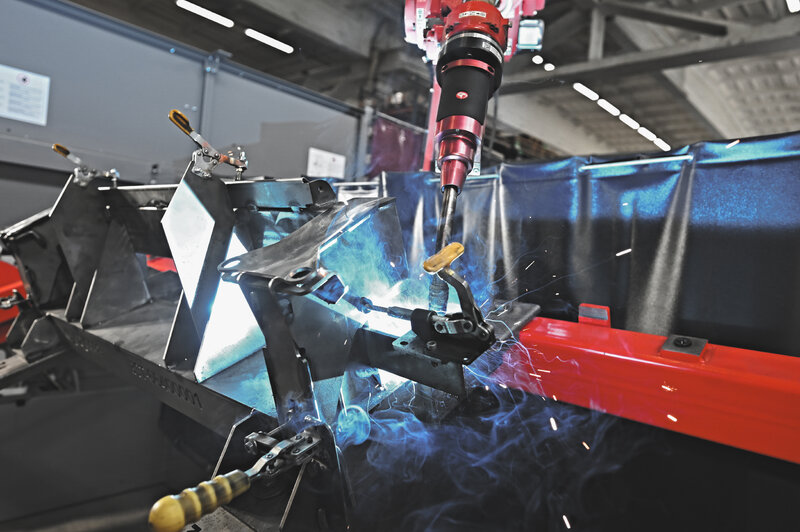
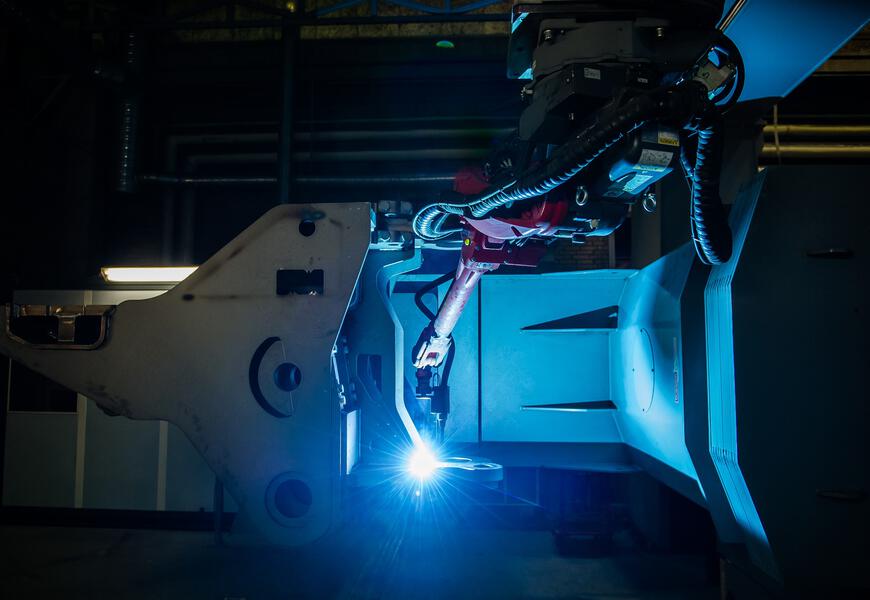
“We mainly weld steel with a thickness of 1 to 8 millimetres, but also stainless steel. A good example is a complex component made of 1 mm steel sheet for conversion kits for wheelchair accessible vehicles. It is a large but thin product that places very high demands on dimensional accuracy. Thanks to well-configured robotic systems, we can achieve this accuracy without reducing production speed.”
You have been using welding robots since 2017. Is there any equipment for such a machine that is indispensable for your type of production?
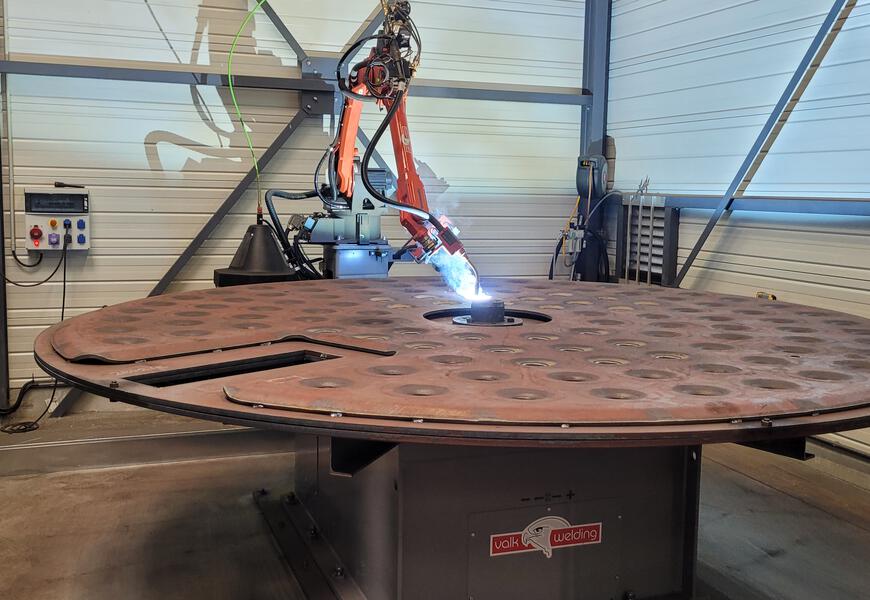
We produce a lot in small series (high mix/low volume), so flexibility and short changeover times are essential. With Valk’s DTPS software, we can program completely offline (outside the machine itself). This allows us to virtually prepare and simulate a new order in advance. When it’s time to start production, we already have a verified program ready. Downtime is therefore minimal, which makes the system cost-effective even for small series.”
How do you manage the accuracy of sheet metal part preparation?
“Anyone who works with sheet metal knows that it is never absolutely perfect. Small tolerances can affect the welding process, especially with thin sheets. Valk Welding robotic systems are equipped with measuring systems such as the Quick Touch Sensing. These systems detect and correct deviations in real time. For us, this means much higher process reliability.”